Brits make millions of long haul trips every year, with destinations such as Dubai and New York some of the most popular. But as the summer holidays approach, how can we make sure we arrive well rested after a flight, and, even better, avoid the dreaded jet lag whilst away?
Bensons for Beds sleep expert, Dr Sophie Bostock, is urging travellers to follow some simple advice to manage sleep issues while travelling and she explains why jet lag can be so disruptive:
“Every cell in our bodies is designed to operate on a 24 hour cycle, based on action during the day, and recovery at night. If you fly across multiple time zones, your internal rhythms can’t immediately adjust their timing to fit the new environment, which means that the brain and your organs can become misaligned leading to headaches, dizziness, nausea, constipation, memory problems and difficulty sleeping.”
And if you’re wondering why jet lag is worse coming home, it does depend on where you’re flying to, as Dr Sophie explains:
“The saying ‘West is Best, East is a Beast’ refers to the fact that flying West involves delaying or extending your internal clocks to more than 24 hours, whereas flying East involves advancing your internal clock, or shortening your internal day. Flying west may be easier since we naturally extend beyond 24 hours and most people transition more quickly to staying awake for longer vs. going to bed earlier, or flying east.”
But there are some simple things you can do which can help ease the jet lag, as Dr Sophie advises:
- Start preparing your body clock two days before you fly
“Ideally, bank extra sleep in the few nights before your departure – you’ll find it easier to recover if you’re well rested.
You could also start to prepare your body clock for whichever way you’re flying, 2-3 days in advance. If you’re flying East, the effect on your body clock is to make the day shorter – so you could try to become more of an early bird and go to bed and get up 1-2 hours earlier. If you’re flying West, the effect on your body clock is to make the day longer – you need to behave more like a night owl and go to bed and wake up 1-2 hours later.
- Change your watch as soon as you get on the flight
“Set your watch to reflect the time in your country of arrival, even if it’s still hours away. This will help to cue the right eating and sleeping behaviours for your new time zone as soon as possible.”
- Let the new time zone dictate eating on the flight
“Try to stick to the meal times you’ll have when you get there, ideally don’t spend the whole flight grazing. Food is one of the cues that sets the timing of your circadian rhythm so eating at the wrong time could delay your adjustment to the new time zone and make jet lag worse.”
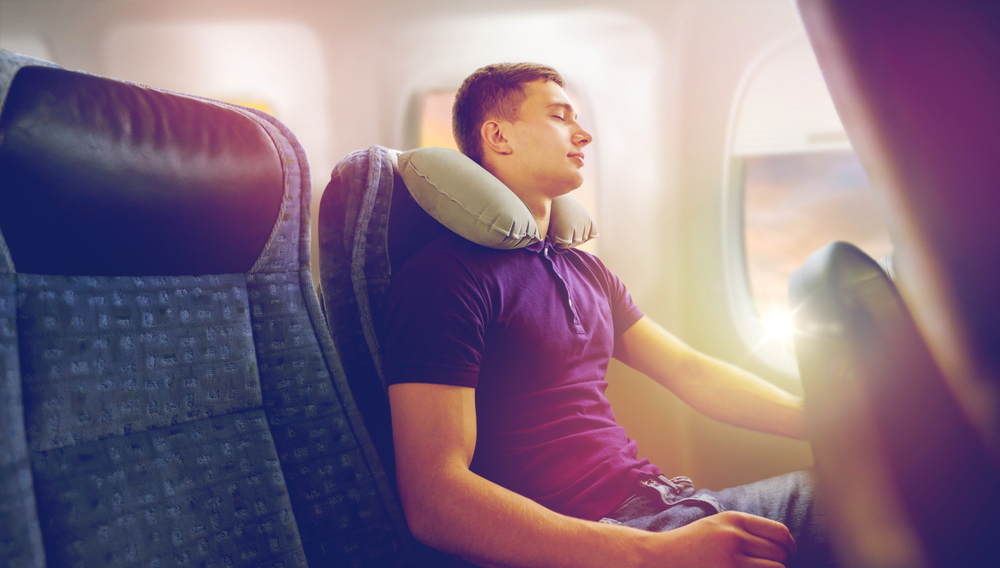
Dr Sophie also notes that it’s always best to travel and arrive well rested if you can, which can also help with jet lag. So, if a first class or even extra leg room ticket aren’t an option, how can you make a plane journey more sleep friendly? Dr Sophie gives her top tips for sleeping on a plane:
- Bring the right equipment with you
“A good pair of noise cancelling headphones can really help with noise, and/or ear plugs if you are used to wearing them. Always fly with an eye mask, which will help shield your eyes from bright cabin lights. Flying in comfortable clothing with layers you can easily take off can help with temperature adjustment. Wearing a hoody and putting the hood up can be helpful way to shield out the outside world when you’re trying to sleep.”

- Choose your nap time carefully
“The stress of getting to through the airport and getting to your seat on the plane on time can sometimes make it hard to fall asleep straight away. Give yourself time to decompress before you try to sleep. It will usually be harder to sleep when food and drinks services are underway. Post meal time is usually a good time for a nap, or longer sleep. Most airlines wake everyone up with bright lights and extra announcements at least 30 minutes before arrival, so it’s much harder to sleep at that time.”
- Don’t stay asleep too long and avoid that in-flight drink!
“Short naps of less than 20 minutes are less likely to make you feel ‘groggy’ than longer sleeps of 30 to 80 minutes. If you can sleep for longer than that, you might get a full sleep cycle, which is approximately 90 minutes, and still wake up feeling refreshed.
Alcohol is never a sleep aid – although it can help with a sedative effect and give the sensation that it helps you fall asleep, the quality of your sleep will be less good, leaving you feeling unrestored.”
For more information visit the Bensons for Beds’ website.
Pack an Extra Pillow to Prevent Back Pain on Your Next Camping Trip