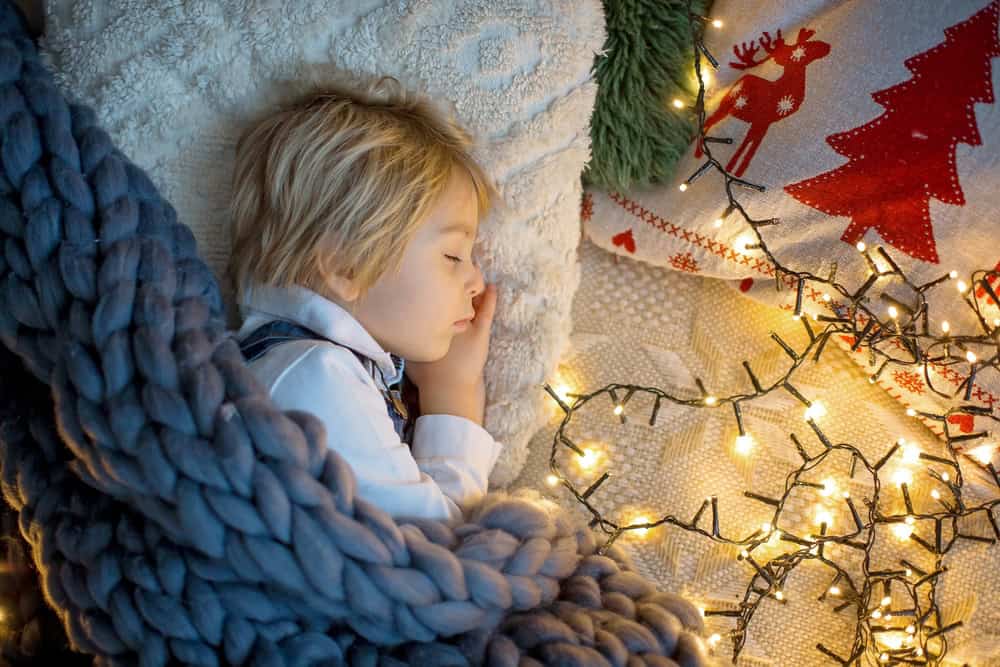
The build-up to Christmas is magical — but when bedtime rolls around, that magic often turns into wide eyes and bouncing feet. All the anticipation triggers a surge of feel-good brain chemicals like dopamine and adrenaline, putting little bodies into full excitement mode just when they’re meant to be winding down.
Speaking with the UK’s number one supplement company, Vitabiotics, Dave explains: “This chemical rush increases alertness and suppresses the calming signals that usually help us sleep. But when parents understand what’s happening and put the right routines and structure in place, it’s absolutely possible to help children settle and enjoy a good night’s sleep — even on the most exciting night of the year.”
Stick to your regular routine
Consistency in a child’s sleep routine, even during the festive season, is key. “Maintaining a consistent sleep routine amidst all the excitement, activity, and changes during the Christmas holidays helps to anchor our brain into feeling calm. With routine, our brains anticipate what follows and then prepare for and expect this to happen.
“Whether it’s the regular bedtime story or the usual winding-down activities, your child will automatically expect to sleep by sticking to their normal bedtime routine, even during the excitement of preparing for Santa.”
Make bedtime later in the days leading up to Christmas
Holiday plans may require slight adjustments to a child’s sleep schedule. Dave recommends making gradual changes to accommodate this, whether it’s late-night visits or trips away.
“If you plan to allow your child to stay up a few hours later on Christmas Eve, possibly in the hope they will wake later too, I recommend staggering the change during the nights before with smaller steps so their body clock naturally adjusts to this time. Then, gradually undo the stagger from Boxing Day afterwards.

Photo by Gary Spears: https://www.pexels.com/photo/close-up-of-christmas-decoration-hanging-on-tree-250177/
“Vice Versa, if the plan is to wake up earlier than usual on Christmas Day to open presents together, you are best setting this up by waking up earlier on Christmas Eve, too. For example, if your child’s usual wake time is 7.30 am for school and you are going to allow them to wake at 6.30 am on Christmas morning, you could set an alarm for 7 am on Christmas Eve.”
Strategies to help manage anxiety and excitement
Dave recommends “a bath, gentle music, reading, and selecting bedtime stories that are calming rather than exciting.” as the best pre-sleep routine for young children. “Acknowledging the excitement and reminding children that a good night’s sleep will help them have the best Christmas possible encourages them to embrace getting to sleep.”
For older children, Dave advocates for mindfulness techniques. “Teaching mindfulness techniques to relax is a great tool to help them calm their minds, including breathing exercises and visualisation of calm places before sleep.”
Recognising that for some children, the excitement of Christmas may trigger anxiety, he advises creating an open space for discussion. “If they are anxious at bedtime, writing a note on a piece of paper about what they are worried about and putting it away in a ‘worry box’ overnight can often help children with specific worries.
“Their worry is safe in the box overnight and can be taken out in the morning to talk more about after a good night’s sleep. Often, we don’t need to do this as everything always feels better in the morning, having slept on the problem overnight.”
The bedtime snack secret – combining carbs and dairy
“Studies have shown poor sleep quality is significantly related to higher added sugar intake. However, there’s no scientific evidence that sugar speeds children up and causes hyperactivity. It’s thought that when we tell children that sugar will make them ‘hyper’, this sets up this behaviour as a ‘self-fulfilling prophecy’.”
Dave recommends reducing sugar intake across the day, especially closer to bedtime and having an evening snack about an hour before sleep. “Good bedtime snacks for young children include fruit, protein and fat, with protein and fat taking longer to digest and likely to fill them up more. Bananas work well as they contain magnesium, which is beneficial for sleep.
“Oatmeal with Greek yoghurt or cheese and crackers are excellent snacks to try. Combining carbohydrates and dairy is a great way to release an amino acid called tryptophan. Tryptophan aids sleep as it is a building block of melatonin, our sleep hormone. Warm milk with honey is the perfect soothing bedtime drink, as the honey helps release tryptophan from the milk.”

Photo by Nguyen Dang Hoang Nhu on Unsplash
Set expectations to avoid late bedtime negotiations
Managing expectations is crucial in ensuring a smooth Christmas Eve sleep experience. Dave recommends discussing holiday plans, bedtime expectations, and potential changes in sleeping arrangements with children well in advance of Christmas Eve.
“This proactive approach will help garner cooperation, especially with older children who may want to negotiate an extension of their usual bedtime!”
How to tackle waking up in the night
“The first thing is to remain calm and centred yourself so that you can reassure your child that whatever is on their mind will be sorted in the morning, especially Santa’s delivery of their presents! Keep your interaction as simple and straightforward as possible to avoid stimulating their mind.
“Always keep the lights dimmed as bright lights can prevent them from getting back to sleep, and never turn on technology or electronics as they will stimulate their brain, even if the blue light filters are used. Have a relaxation technique or two that you can use, which involves slow breathing and calming visualisations, which can help them settle again.
“The Progressive Muscle Relaxation technique can work well in these instances. Start by contracting each muscle group from the feet to the head. Your child breathes in during the contraction and then out in the relaxation phase.”
The ‘first night away’ effect
According to Dave, the ‘first night away’ effect refers to the challenge of getting a restful night’s sleep in an unfamiliar setting, as we naturally stay more alert.
To alleviate this, Dave advises, “Making things as familiar as possible.” He recommends sticking to the usual bedtime routine and “incorporating familiar elements, such as their bedding, pillow, and cuddly toy, to help your child feel more secure.”
How to structure Christmas Eve
“If you can, plan your Christmas Eve activities so the day gradually calms towards bedtime.”
Morning: Dave advocates for a structured approach to activities. He suggests beginning the morning with outdoor activities, which allow children to “expel energy and benefit from natural tiredness at night.” Getting sunlight first thing is also an important component for strengthening our body clock, which in turn helps us get to sleep more easily at night.
Afternoon: “After lunch is a good time for screen time and boisterous indoor activity. Ideally, you want to stop screen time two hours before bedtime. Having family time with a digital detox, where everyone in the family is off tech, including mobile phones, is a great way of setting this up.”
Evening: Transitioning into the evening, Dave suggests embracing quieter activities for a soothing wind-down. “Playing cards, engaging in a family board game, or participating in a gentle craft like drawing can help make things more relaxing as part of a wind-down period and try to avoid stimulating activities like party games.”
Sleep Expert Reveals the Ideal Temperature to Boost Your Sleep Score This Winter