How to Wind Down Properly: Drinks, Dinner and Better Sleep
Almost every piece of sleep advice starts at the wrong moment. Blackout blinds, the right pillow, a cooler room, phone out of the bedroom — all sound, all useful, and all aimed at a point in the evening when the outcome has largely been decided already.
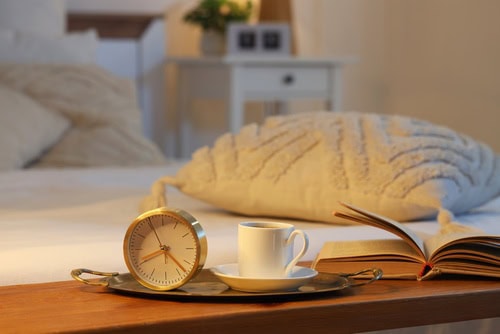
The hour that matters most is the one before any of that. Roughly nine to eleven, depending on your schedule: the stretch between finishing whatever the day required and actually going to bed. It’s the least examined part of the day and the most consequential, because it’s when your body decides whether it’s shutting down or still on duty.
Why the Hour Before Bed Decides the Night
Falling asleep isn’t a switch. It’s a slope, and your body starts descending it long before you get under the duvet.
Core body temperature has to drop by about a degree for sleep to begin properly. Cortisol needs to be on its way down. Melatonin release depends on your eyes having seen genuinely dim light for a while. None of these are instant, and all can be interrupted by things that feel harmless — a bright kitchen, a heavy meal, an argument on the internet at 10.45.
So the useful question isn’t how do I fall asleep faster. It’s what am I still asking my body to do at half past ten.
The Drink Question, Answered Honestly
This is the part most evening advice fudges, so let’s be direct: alcohol is a sedative, and sedation is not sleep.
A drink before bed genuinely does make you fall asleep faster, and it pushes you into deep sleep early in the night. That’s why it feels like it’s working. Then your body metabolises it, and the second half of the night inverts:
- REM sleep is suppressed in the early hours after drinking — the stage responsible for memory consolidation and emotional processing.
- The back half fragments. As the alcohol clears, sleep becomes lighter and more broken, with brief wakings you often don’t remember.
- Breathing gets worse. Alcohol relaxes the throat muscles, worsening snoring and, for anyone with sleep apnoea, increasing pauses in breathing.
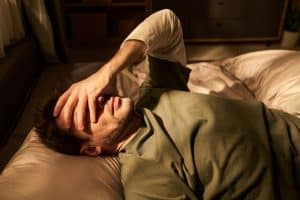
- You wake unrested after a full eight hours in bed — the bit people find most baffling.
The general clinical guidance is to leave at least three hours between your last drink and bed, and longer if you’ve had more than one or drunk on an empty stomach.
Notice what that guidance doesn’t say. It doesn’t say don’t drink. It says don’t drink then.
Move the Drink, Don’t Delete It
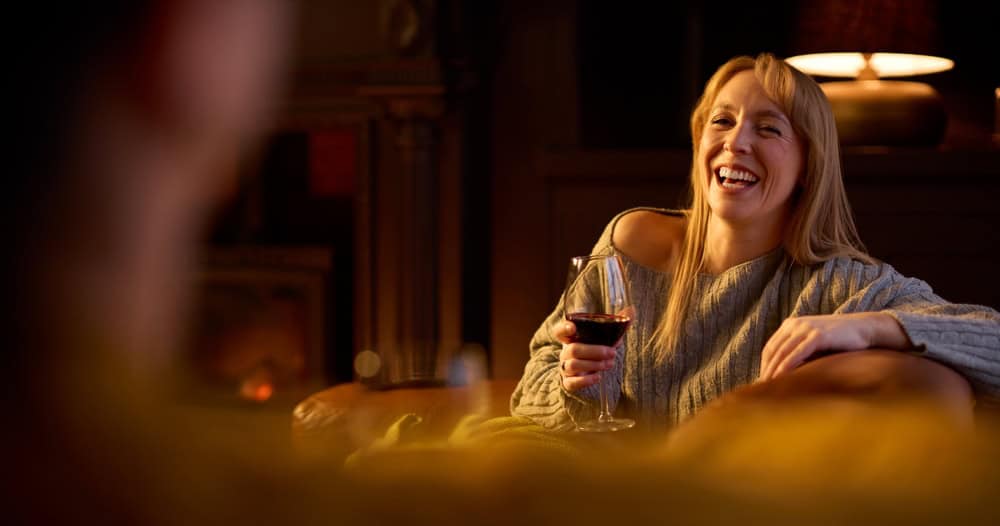
A glass of wine at seven with dinner is a completely different proposition from the same glass at eleven on the sofa. One is part of a meal; the other is a sedative with a nice label.

Moving it earlier does three useful things at once. It puts food in the equation, which slows absorption. It gives your body the clearance window it needs before bed. And — not a small thing — it makes the wine taste significantly better, because you’re actually paying attention to it.
Drinking with food is also where wine stops being a habit and becomes interesting:
- Acidity cuts through fat, which is why a crisp white handles cheese and cream sauces that defeat a heavy red.
- Tannin needs protein. A structured red that tastes harsh alone softens completely against roast meat.
- Sweetness should match or exceed the dish, or the wine tastes thin next to pudding.
You don’t need expertise for this — a guide to pairing wine with food covers the logic in more depth. The point here is simply that wine belongs at dinner, not at bedtime.
The Nightcap Myth
The nightcap is a lovely idea attached to a bad mechanism. A measure of something aged and complex at half past eleven is a ritual worth wanting — but as a sleep aid it’s the least effective option on the shelf.
The fix is the same one, applied to a different glass:
- Treat it as an after-dinner drink, not a pre-bed one. Nine o’clock rather than eleven.
- Pour less and pay more attention. A small measure of something you’d describe out loud beats a large measure of something you wouldn’t.
- Sit with it away from a screen. Most of what people want from a nightcap is the pause, not the alcohol.
This is the one category where trading up genuinely changes things. A single well-chosen bottle from a proper bourbon and whisky selection lasts months when you’re drinking it deliberately, and the ritual survives entirely intact — it just happens two hours earlier.
The Rest of the Hour
Drink is only one input. Four others matter as much and cost nothing:

- Swap the wind-down drink. A warm one does the job far better — the best types of tea to drink before bed is a more reliable route to feeling sleepy than anything alcoholic, and it costs you nothing later.
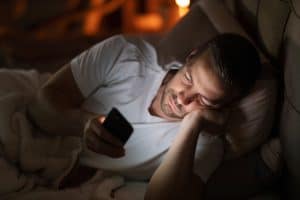
- Drop the light. Overhead lights off, lamps on, from about an hour out. Bright light after dark is the single biggest suppressor of melatonin, and most British kitchens are lit like operating theatres.
- Finish eating earlier. A large meal close to bedtime raises core temperature and keeps digestion running when it should be winding down. Two to three hours before bed is a reasonable target.
- Cool the room. Around 16–18°C suits most people. A warm bath an hour or two before bed works by the same mechanism — it’s the temperature drop afterwards that helps.
- Give the day an ending. Write tomorrow’s list and put the laptop somewhere else. An unfinished day keeps cortisol elevated more effectively than caffeine.
When an Occasion Beats the Routine
None of this applies to your birthday.
Nobody consults a sleep-hygiene protocol at a wedding, and a life arranged entirely around optimal rest isn’t one most people want. The skill is telling the difference: most weeks contain one or two real occasions and five ordinary evenings. Protect the ordinary ones and the celebrations cost you nothing you mind paying.
When an evening genuinely is an occasion, sparkling wine is the kinder choice — lower in alcohol than most reds, served cold, drunk slowly, and almost impossible to consume absent-mindedly. A guide to the best champagnes for different occasions is a better starting point than price, which predicts very little about whether you’ll enjoy the bottle.
Giving Someone an Evening
The same thinking makes for much better presents, because the strongest thing you can give a tired person isn’t another object. It’s a reason to stop.
- Give rest directly. Weighted blankets, proper blackout blinds, a decent eye mask — gift ideas built around sleep are unglamorous and disproportionately appreciated.
- Give an evening, not a bottle. Wine paired with cheese or chocolate becomes a planned occasion rather than something absorbed into the weekly shop.
- Give something they’ll use together. Engraved glassware and gifts chosen for a couple rather than off a registry get brought out for years, long after a generic bottle has been forgotten.
When You Need More Than an Early Night
Sometimes the problem isn’t the evening. It’s the accumulated year behind it, and no amount of rearranging your wind-down will touch that.
This is where the restorative trip earns its keep — and where the timing logic scales up. Kerala’s Ayurvedic tradition holds that the monsoon month of Karkidakam, in July and August, is the ideal season for treatment, because the humidity softens the skin and lets the medicinal oils work more deeply. That’s the exact inverse of how most people plan a holiday, which is part of why it works: you go when the place is best for what you need, not when the flights are cheapest. This guide to the best time to visit South India sets out how the seasons there actually behave.
A week of early nights, no screens and someone else deciding dinner resets things a good routine can only maintain.
Frequently Asked Questions
How long before bed should I stop drinking alcohol?
At least three hours, and longer after more than one drink or on an empty stomach. Moving your last drink earlier usually helps more than reducing the amount.
Does a nightcap help you fall asleep?
It helps you lose consciousness faster, which isn’t the same thing. It suppresses REM early and fragments the second half of the night, so you wake less rested despite falling asleep more easily.
How long should a wind-down routine be?
About an hour for most people. The specific activities matter less than their consistency; doing roughly the same things in roughly the same order trains the association faster than any single technique.
Ending the Day on Purpose
The evening isn’t dead time between work and unconsciousness. It’s most of the discretionary time an adult gets, and it deserves better than being half-spent in front of something with a glass you’re not really tasting.
Dim the lights. Eat earlier. Move the drink to dinner and make it one you’d actually comment on. Give the day a proper ending rather than letting it fray into bedtime.
None of it is dramatic, and all of it works — which is more than can be said for most of what gets sold as a sleep solution.